
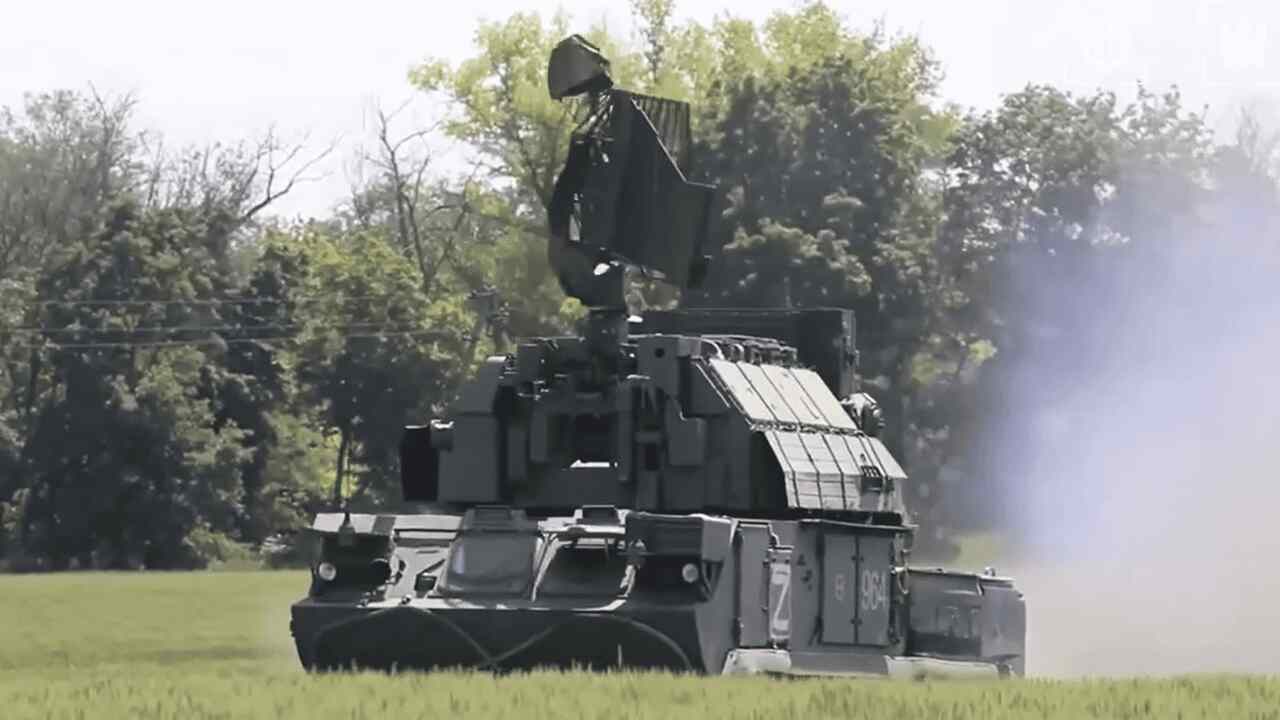
Kupol, a Russian defense company, has unveiled a concept for a system designed to protect the Tor air defense system from Ukrainian drone attacks.
According to the Ukrainian outlet Militarnyi, this information was shared by armored vehicle researcher Andrii Tarasenko.
According to Tarasenko, the proposed system combines electronic warfare (EW) tools, drone signal detectors, and both 360-degree and directional jamming modules. The detectors are installed diagonally, at the front and rear of the vehicle, and are connected to a control unit and power supply.
The system operates in two independent modes. The first is an omnidirectional mode, which provides full 360-degree protection of the combat vehicle by jamming FPV drone control signals at distances of up to 500 meters.
In this mode, a hemispherical jamming field is created, covering 360° in azimuth and up to 90° in elevation. It can emit continuous interference or automatically activate when drone video transmission signals are detected.
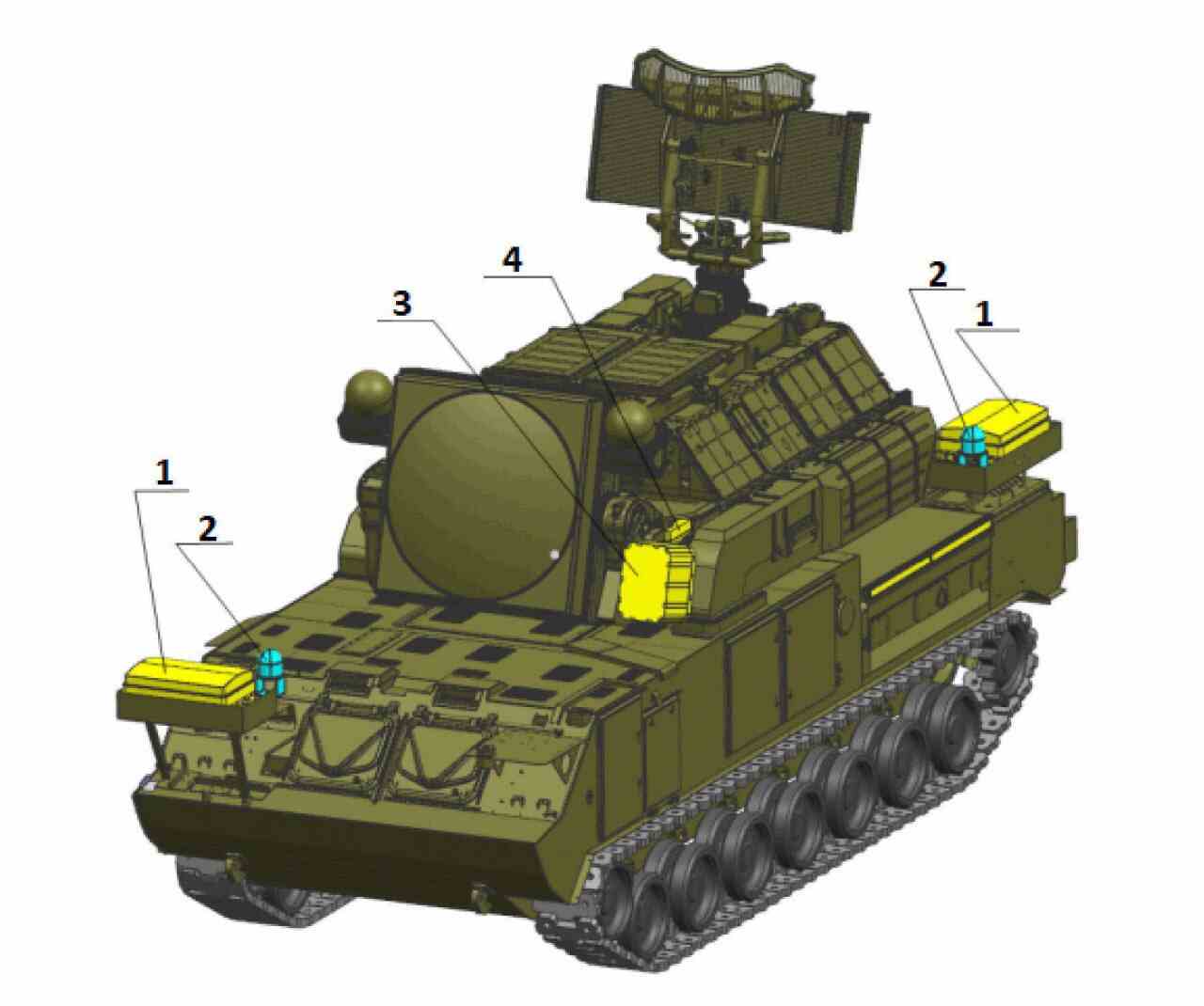
The second mode is sector-based and is designed to counter reconnaissance drones at much greater distances, up to 5 km. For this, a set of directional antennas is used, mounted on the tracking radar antenna and synchronized with its movement, allowing the jamming system to automatically point toward the tracked target.
The directional module is equipped with jamming generators using vertical polarization, operating in the frequency range of 415 to 5860 MHz with an output power of at least 2 kW, providing effective suppression of drone control and navigation channels over long distances.
It is worth noting that major military air defense systems, including Tor, Buk, and Pantsir, are increasingly becoming targets of Ukrainian tactical, operational-tactical, and FPV drones. As a result, the concept is believed to have emerged in response to high loss rates, forcing Russian forces to seek new ways to counter this threat.
At the same time, such solutions may prove ineffective due to constant changes in control frequencies, as well as the advancement of autonomous flight and guidance systems.
According to Militarnyi, a more effective approach could be to protect these systems with mobile fire groups and use passive protection measures, including additional armor elements.
Photos: USF / Andrii Tarasenko. This content was created with the help of AI and reviewed by the editorial team.
